Government
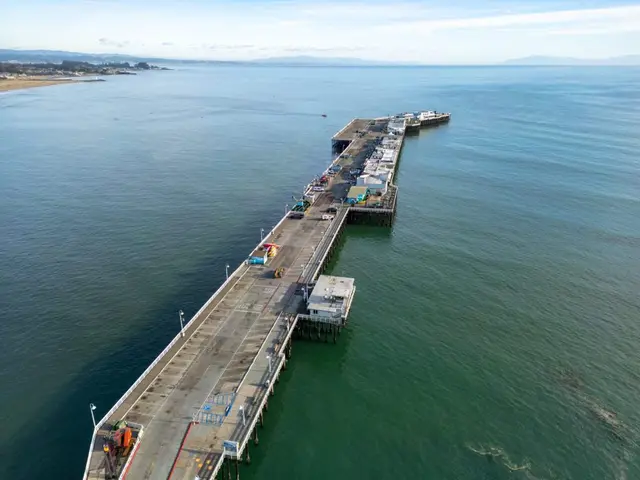
Santa Cruz closes city beaches, wharf as county warns of 35-foot waves
By Marcus Chen
Advertisement · Why this ad?
Marcus manages the day-to-day editorial workflow across all brands, coordinating coverage assignments and ensuring editorial standards are met. He previously served as city editor at the Pioneer Press and holds a degree in Political Science from Carleton College.
More from Marcus →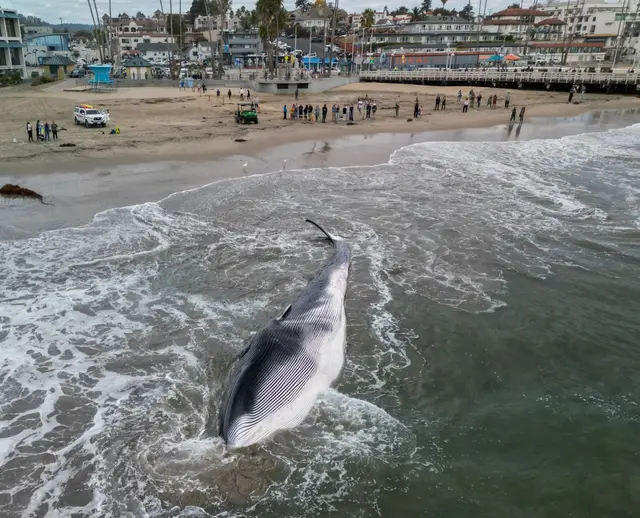
A massive fin whale, its immense form swaying in the surf, drew onlookers to Cowell Beach in Santa Cruz Thursday morning after becoming stranded, prompting a swift response from city workers and rescue teams. The incident, first reported around 8:30 a.m., highlights the fragility of marine life and the challenges of responding to such events, especially as communities grapple with increasingly unpredictable ocean conditions.
City officials and the Marine Mammal Stranding Network mobilized quickly after receiving the initial report. Juli Limon, the stranding coordinator for Long Marine Lab’s Marine Mammal Stranding Network, explained the immediate focus was on assessing the whale’s condition. “It was first reported to us between 8:00 and 8:30 in the morning, alive with strong breath,” Limon stated. By 10 a.m., however, the whale appeared to have stopped breathing, a grim development that underscored the precariousness of the situation.
The sight of the whale’s lengthy body rolling listlessly in the waves captivated beachgoers and those on the Santa Cruz Municipal Wharf. The incident has also brought renewed attention to the recent tragedies impacting Santa Cruz County’s coastline, including the ongoing search for Senah Park, who was swept out to sea near Panther State Beach U.S. Coast Guard, and the closure of Capitola Beach due to a suspected E. coli outbreak Santa Cruz County. These events underscore the complex interplay of environmental factors and human activity impacting the region’s natural resources.
Fin whales, also known as finback whales (Balaenoptera physalus), are the second-largest whale species on Earth, surpassed only by the blue whale. They are baleen whales, meaning they filter feed on small organisms like krill and small fish. They are typically found in all major oceans, but Monterey Bay, with its rich upwelling currents and abundant food supply, serves as a crucial feeding ground for these magnificent creatures, particularly during the warmer months. Their presence in the area is a testament to the bay's ecological health, but also makes them vulnerable to human-caused disturbances and environmental changes. The fact that a fin whale, a species known for its migratory patterns and vast oceanic ranges, ended up stranded on Cowell Beach raises serious questions about its health and potential contributing factors.
A fin whale became stranded on Cowell Beach in Santa Cruz on Thursday morning. City workers and rescue teams responded to the scene after a call came in around 8:30 a.m. The whale, presumably a young and underweight individual, was seen rolling over in the surf. Biologists were observing the whale to try to determine its sex and vital signs, according to Juli Limon, the stranding coordinator for Long Marine Lab’s Marine Mammal Stranding Network.
Initially reported alive with strong breath between 8:00 and 8:30 a.m., the whale did not appear to be breathing by 10 a.m. The exact cause of the stranding remains unknown, but experts are considering factors such as illness, injury, or disorientation. The incident drew a significant crowd, with people gathering on the beach and the Santa Cruz Municipal Wharf to witness the event. The logistical challenges of responding to a whale stranding are significant, requiring specialized equipment and expertise to minimize stress on the animal and ensure the safety of responders. The potential for further complications, such as tides or weather changes, adds another layer of complexity to the situation.
The stranding of the fin whale has resonated deeply within the Santa Cruz community, especially given the recent string of coastal incidents. Many residents expressed sadness and concern over the whale’s plight, reflecting a broader sense of vulnerability regarding the region’s marine ecosystem. The incident occurred against a backdrop of other troubling news: the ongoing search for Senah Park, who was swept out to sea near Panther State Beach U.S. Coast Guard, and the closure of Capitola Beach due to a suspected E. coli outbreak Santa Cruz County.
Senah Park, 24, was last seen with a group of friends on Panther State Beach on Sunday evening when an incoming tide knocked them over. The U.S. Coast Guard suspended its search for her on Monday afternoon after combing over roughly 95 square miles over eight hours. Lt. Max Holloway of the U.S. Coast Guard described the decision as “difficult,” emphasizing the extensive search effort and environmental conditions U.S. Coast Guard. The Santa Cruz County Sheriff’s Office is also involved in the ongoing efforts. The incident highlights the inherent dangers of coastal recreation and the importance of understanding tide patterns and respecting the power of the ocean. The community's grief and concern for Senah Park underscores the close connection residents feel to the natural beauty and inherent risks of the coastline.
The Public Health Department of Santa Cruz County closed Capitola Beach on Tuesday after nine cases of illness, all involving children from Santa Cruz County and the San Francisco Bay Area, were reported to public health officials. The cases are linked to likely exposures at the beach and are being investigated as a potentially serious E. coli outbreak. Health officials have urged anyone experiencing symptoms such as abdominal cramps, diarrhea, fatigue, or nausea to contact their healthcare provider Santa Cruz County. E. coli outbreaks in beach water are often linked to runoff from agricultural land or sewage contamination, and the closure underscores the need for vigilant monitoring of water quality and proactive measures to prevent contamination.
Wildlife experts at the scene emphasized that there was nothing they could do while the whale was still alive. The focus during that period was on observation and data collection to better understand the whale's condition and potential causes of the stranding. After its death, officials will decide whether to take it away by land, tow it out to sea, or allow the tide to carry it away naturally. The decision regarding the whale’s disposal is complex, balancing environmental concerns with logistical feasibility. Towing the whale out to sea is often preferred to prevent it from becoming a hazard or attracting scavengers, but requires specialized vessels and careful planning. The Marine Mammal Stranding Network is continuing to monitor the situation and will provide further updates as they become available. The network relies on trained volunteers and scientific expertise to respond to marine mammal strandings, providing invaluable assistance in these challenging situations.
The incident at Cowell Beach underscores the need for ongoing collaboration between local agencies, marine biologists, and the community to ensure the safety of both people and wildlife along the Santa Cruz coastline. Residents are encouraged to stay informed about beach closures and advisories, and to exercise caution when entering the water. The U.S. Coast Guard provides resources on coastal safety and water awareness U.S. Coast Guard, and information about beach closures and water quality can be found on the Santa Cruz County Public Health Department website Santa Cruz County. Beyond immediate safety precautions, long-term solutions require addressing broader environmental challenges such as climate change, pollution, and habitat degradation, all of which can impact marine life and coastal ecosystems.
For more information on marine mammal strandings, residents can contact the Long Marine Lab’s Marine Mammal Stranding Network. It’s a reminder of the interconnectedness of our community and the natural world, demanding responsible stewardship and a deep respect for the power and beauty of the ocean. The incident serves as a call to action, encouraging individuals to become more informed about marine conservation efforts and to support policies that protect our coastal resources. The future health of Monterey Bay and its incredible biodiversity depends on the collective actions of residents, policymakers, and scientists alike.
The incident at Cowell Beach underscores the need for ongoing collaboration between local agencies, marine biologists, and the community to ensure the safety of both people and wildlife along the Santa Cruz coastline. It’s a challenge that requires a shared commitment to responsible stewardship and a deep respect for the power and beauty of the ocean.
Santa Cruz, California
Government
Thursday, November 12, 2026
6 min
By Marcus Chen

By Katherine Langford

By Marcus Chen
By Katherine Langford